Shopping Bag
No products in the cart.

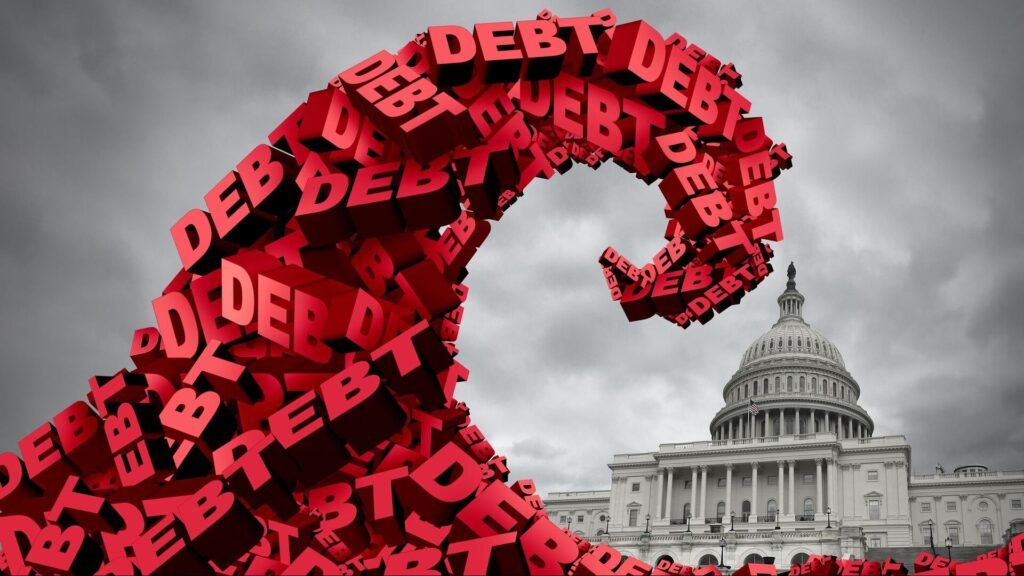
In 1933 the US authorities defaulted on its debt by not repaying the gold it owed. In 1965 it allowed its central financial institution to default on the silver it owed. These two treasured metals are the money of the American Constitution. They outlined the greenback as an quantity of treasured steel weight.
Linking the foreign money to a treasured steel is smart and prudent financial coverage. Adherence to it limits the amount of {dollars} that may be issued relative to the burden of steel within the US Treasury’s vaults, thereby stopping debasement of the greenback’s buying energy, usually known as ‘inflation’. Sadly, frequent sense and cautious banking practices had been deserted with predictable outcomes. The 2 defaults adopted when new money owed generated by banks brought on the amount of {dollars} to rise till they turned too massive relative to the burden of steel backing them, at which level confidence within the foreign money broke. What was $35 per ounce of gold in 1971 is now roughly $4,800.
Immediately’s fiat greenback is just not tied to treasured metals, severing the hyperlink to a major constitutional precept that imposed indispensable self-discipline on US authorities spending and the banking system. Within the absence of that self-discipline, the US authorities resides past its means, which suggests everybody else resides under theirs.
The federal government’s spending aspirations are being funded with debt, giving rise to newly created {dollars} being conjured up by the Federal Reserve and the nation’s banks. This ever increased amount of {dollars} is being debased with a 2percentp.a. inflation goal, however the lack of buying energy every year is usually increased in observe, and sometimes a lot increased.
This erosion of the fiat greenback’s buying energy can’t be seen in isolation. Just like the gold greenback and silver greenback earlier than it, right this moment’s fiat greenback could be very a lot tied into the US authorities’s monetary place, which has been step by step deteriorating for many years by an growing debt burden brought on by overspending. The similarity to its two earlier defaults is ominous.
The US authorities is dashing headlong towards the monetary tipping level that can trigger it to default on its guarantees but once more. Its debt load is changing into too huge and past the US authorities’s monetary capability to return to its collectors the buying energy they loaned to the federal government. That’s even earlier than contemplating the curiosity as a consequence of collectors to compensate them for the chance they take by lending their buying energy to a spendthrift authorities that has jettisoned its constitutional necessities.
In an October 2023 article, I recognized a tipping level for the subsequent US authorities default, when its Insolvency Ratio of its curiosity expense and income hit 30%. I projected it could arrive in 2025. It didn’t arrive on that schedule however has not been averted. It’s simply delayed as a result of rates of interest rose extra slowly than I projected.
This text updates these projections. However first, it’s vital to elucidate how US authorities bulletins misstate in two methods its true monetary place. It makes use of cherry-picked information that flatter the federal government’s place that’s sadly reported by the mainstream media of their monetary commentary. Each are defined right here for readers who’ve elsewhere seen different figures and puzzled why my numbers differ. The true outcomes require some digging into the US authorities’s monetary place as reported in its Month-to-month Treasury Assertion (MTS), which is the supply used all through this text.
I take advantage of gross curiosity on Treasury debt securities because the numerator for the Insolvency Ratio. It’s the whole curiosity the Treasury pays on all its debt. For fiscal 12 months (FY)2025 that determine is $1,215,614 million, Desk 3 of the MTS.
A lot monetary commentary, nevertheless, makes use of “internet curiosity” from Desk 9 of the MTS, which is $970,359 million for FY2025. The distinction of $245 billion represents curiosity the Treasury pays on debt devices held by its personal belief funds – Social Safety, Medicare, army retirement, civil service pensions, and others. These are actual obligations, and the curiosity paid on them represents the federal government’s legal responsibility to the funds’ beneficiaries. Netting it out understates the federal government’s true curiosity burden by $245 billion and produces an artificially decrease Insolvency Ratio.
The federal government reviews a “funds deficit” of $1,775,357 million for FY2025. This determine is sort of universally cited, however Desk 6 of the MTS tells a distinct story. Complete Treasury Securities Excellent rose from $35,464,674 million initially of FY2025 to $37,637,553 million on the shut, a rise of $2,172,879 million. That $397 billion hole between the reported deficit and the precise improve in debt arises from off-budget objects and numerous unconventional accounting therapies that exclude actual borrowing from the headline funds deficit quantity. The rise in whole debt excellent is what really occurred to the nationwide steadiness sheet. It’s the solely sincere measure of how a lot deeper within the gap the federal government went in FY2025. I take advantage of the annual improve in debt – the true deficit – all through this replace.
With these two explanations established, listed below are the important thing FY2025 figures from the MTS:
TABLE 1. Federal Authorities Monetary Outcomes for FY 2025
| Measure | Reported / Media Determine | Appropriate MTS Determine | Supply |
| Curiosity expense | $970B (internet curiosity) | $1,215.6B (gross) | MTS Desk 3 — highlighted line |
| Price range deficit | $1,775B (unified funds) | $2,172.9B (debt improve) | MTS Desk 6 — securities excellent |
| Insolvency Ratio | ~18.6% (internet foundation) | 23.2% (gross foundation) | Gross Curiosity ÷ Complete Income |
Defaults relaxation on numbers — particularly the money stream of income and outlays and their relation to whole debt excellent. The important thing equation in my evaluation is the Insolvency Ratio.
A 30% ratio is usually seen because the tipping level that traditionally ignites a financial, financial, and banking disaster. Past 30%, the economic system is now not producing sufficient wealth to service the debt load, making a vicious spiral as a result of the curiosity clock runs constantly. When overindebted, the curiosity expense burden begins to exceed all different spending. Rates of interest then rise due to the rising dangers of debasement and default, inflicting deficits to speed up, which in flip trigger the debt mountain to develop sooner. At 30% the federal government faces a stark alternative between overt default or foreign money debasement usually leading to hyperinflation.
The next desk presents the federal authorities’s monetary outcomes from 1980 via the FY2025. The Implied Curiosity Price is Gross Curiosity divided by the 12 months’s Common Debt. The column “Outlays Much less Gross Curiosity” exhibits what the federal government spends on every part apart from debt service.
TABLE 2. Federal Authorities Monetary Outcomes, 1980–2025 (chosen years)
| Fiscal Yr | Federal Debt ($M) | Common Debt ($M) | Gross Curiosity ($M) | Implied Curiosity Price | Federal Income ($M) | Outlays ($M) | Outlays Much less GI ($M) | Insolvency Ratio |
| 1980 | 909,041 | 869,254 | 74,803 | 8.61% | 517,112 | 590,941 | 516,138 | 14.5% |
| 1985 | 1,817,423 | 1,691,004 | 178,871 | 10.58% | 734,037 | 946,344 | 767,473 | 24.4% |
| 1986 | 2,120,501 | 1,968,962 | 190,272 | 9.66% | 769,155 | 990,382 | 800,110 | 24.7% |
| 1990 | 3,206,290 | 3,037,045 | 264,691 | 8.72% | 1,031,958 | 1,252,993 | 988,302 | 25.6% |
| 1991 | 3,598,178 | 3,402,234 | 285,421 | 8.39% | 1,054,988 | 1,324,226 | 1,038,805 | 27.1% |
| 1992 | 4,001,787 | 3,799,983 | 292,294 | 7.69% | 1,091,208 | 1,381,529 | 1,089,235 | 26.8% |
| 1993 | 4,351,044 | 4,176,416 | 292,479 | 7.00% | 1,154,334 | 1,409,386 | 1,116,907 | 25.3% |
| 1994 | 4,643,307 | 4,497,176 | 296,253 | 6.59% | 1,258,566 | 1,461,752 | 1,165,499 | 23.5% |
| 2000 | 5,628,700 | 5,617,112 | 352,345 | 6.27% | 1,827,452 | 1,788,950 | 1,436,605 | 19.3% |
| 2008 | 9,986,082 | 9,468,413 | 402,429 | 4.25% | 2,303,466 | 2,982,544 | 2,580,115 | 17.5% |
| 2019 | 22,669,466 | 22,065,872 | 522,644 | 2.37% | 3,421,164 | 4,446,960 | 3,924,316 | 15.3% |
| 2021 | 28,385,562 | 27,644,009 | 572,884 | 2.07% | 4,047,111 | 6,553,621 | 5,980,737 | 14.2% |
| 2022 | 30,838,586 | 29,612,074 | 717,568 | 2.42% | 4,897,399 | 6,273,324 | 5,555,756 | 14.7% |
| 2023 | 33,167,334 | 32,002,960 | 879,307 | 2.75% | 4,439,284 | 6,134,432 | 5,255,125 | 19.8% |
| 2024 | 35,464,674 | 34,316,004 | 1,133,037 | 3.30% | 4,918,106 | 6,734,896 | 5,601,859 | 23.0% |
| 2025 | 37,637,553 | 36,551,114 | 1,215,614 | 3.33% | 5,234,616 | 7,009,974 | 5,794,360 | 23.2% |
In 1980 when Federal Reserve Chairman Paul Volcker was elevating rates of interest to combat inflation, the implied rate of interest on the common debt was 8.61%, and the Insolvency Ratio was 14.5%. The state of affairs was manageable regardless of the excessive nominal charges as a result of the whole debt was nonetheless comparatively small. As rates of interest declined via the Nineteen Eighties and into the Nineteen Nineties, the Insolvency Ratio paradoxically rose as a result of irresponsible federal spending resulted in continuous funds deficits and a rising debt mountain that offset the good thing about falling charges.
The ratio hit 27.1% in 1991, the 12 months the alarm bells rang loudest as a result of a best-selling e book titled “Chapter 1995: The Coming Collapse of America and The right way to Cease It” reached a mass viewers. The 30% Insolvency Ratio that usually triggers a disaster was within reach. As a substitute of reversing course to cease uncontrolled spending to finish perpetual deficits, politicians selected a shameful various. The federal government started pushing the Insolvency Ratio decrease as a result of the Federal Reserve manipulated rates of interest under unfettered free market ranges, artificially lessening the price of debt.
The monetary repression ‘labored’; it purchased time. By protecting rates of interest artificially low, the implied rate of interest on the debt fell decade by decade at the same time as the quantity of debt soared. The Insolvency Ratio declined from 27.1% in 1991 to 14.2% in 2021, at the same time as whole debt rose from $3.6 trillion to $28.4 trillion.
It’s important to grasp the maths behind decrease rates of interest and simply as importantly, that the Insolvency Ratio was suppressed by coverage, not by fiscal self-discipline. Deficits and the debt mountain grew all through, however curiosity suppressed to synthetic ranges enabled politicians to kick the can a couple of extra years with out fixing the underlying drawback that the federal authorities was residing past its means.
The post-pandemic surge in inflation compelled the Federal Reserve to start elevating rates of interest in 2022. The consequence of many years of economic repression was quick and dramatic. The Insolvency Ratio jumped from 14.7% in 2022 to 19.8% in 2023, a 5-point surge in a single 12 months. It continued rising to 23.0% in FY2024 and 23.2% in FY2025. We are actually in the identical territory we occupied within the late Nineteen Eighties on the best way as much as the 1991 alarming stage, however with a debt load greater than ten instances larger and with out the headroom Paul Volcker had obtainable to lift rates of interest with out triggering insolvency alarm bells.
The mechanism I described in 2023 is working precisely as I anticipated. Because the debt rises, so does the curiosity expense from carrying it. With out cuts to different spending — which aren’t occurring — the rising curiosity expense deepens the deficit and requires extra borrowing. Extra borrowing will increase the quantity of debt. A bigger debt at increased rates of interest generates but extra curiosity expense, creating the spiral towards insolvency.
The 30% tipping level was not reached in 2025. It didn’t occur as a result of I projected the implied rate of interest on the debt can be 3.74% in FY2024 and 4.37% in FY2025. The precise figures had been 3.30% and three.33% respectively. The Federal Reserve’s rate-cutting cycle that started in late 2024, mixed with the burden of debt rolling to shorter-duration at decrease yields, saved the implied fee decrease than I anticipated. My course was right, however not the timing. Being roughly two years early adjustments nothing concerning the vacation spot.
Roughly $9 trillion in pre-2022 low-rate debt stays excellent. Because it matures and is refinanced at present market charges of 4% or increased, the inevitability of math will contribute to a worsening debt spiral that can erode the greenback’s buying energy, inflicting demand for it to fall as its holders search safer options. The Federal Reserve’s steadiness sheet operations are at the moment absorbing roughly $540 billion per 12 months in Treasury demand — artificially suppressing charges — however this can not proceed indefinitely with out opposed penalties for the greenback’s trade fee and for inflation.
Following are two up to date eventualities, each anchored to FY2026 half-year actuals. The one variable between them is the velocity of implied rate of interest repricing, and the income development assumption that flows from the macro surroundings every state of affairs implies.
On this state of affairs the Federal Reserve’s “ample reserves” regime persists with solely modest resistance from incoming Fed Chair Kevin Warsh. T-bill purchases of about $40 billion per 30 days proceed absorbing a big share of latest issuance. The implied fee on whole federal debt rises steadily as roughly one-third of publicly-held debt matures and rolls at present 4%+ market charges, however no disorderly repricing happens. Income grows at a sensible stage however under the tempo of Treasury estimates, reflecting its monitor document of official overestimation documented within the MTS.
TABLE 3. Situation A: Gradual Price Normalization
| Fiscal Yr | Federal Debt ($M) | Common Debt ($M) | Implied Price | Gross Curiosity ($M) | Federal Income ($M) | Complete Outlays ($M) | Outlays Much less GI ($M) | Insolvency Ratio | True Deficit ($M) |
| FY2025 | 37,637,553 | 36,551,114 | 3.3258% | 1,215,614 | 5,234,616 | 7,009,974 | 5,794,360 | 23.22% | 2,172,879 |
| FY2026 | 39,937,553 | 38,787,553 | 3.4500% | 1,338,171 | 5,550,000 | 7,600,000 | 6,261,829 | 24.11% | 2,300,000 |
| FY2027 | 42,758,553 | 41,348,053 | 3.7500% | 1,550,552 | 5,883,000 | 8,284,000 | 6,733,448 | 26.36% | 2,821,000 |
| FY2028 | 45,970,128 | 44,364,340 | 4.0000% | 1,774,574 | 6,206,565 | 8,988,140 | 7,213,566 | 28.59% | 3,211,575 |
End result: The 30% tipping level is just not reached inside the FY2026–2028 window. The Insolvency Ratio reaches 28.6% by FY2028, with whole debt at $46.0 trillion and a real annual deficit of $3.2 trillion. The pending disaster is deferred, not averted.
This state of affairs is purposefully constructed so the 30% tipping level is reached in FY 2027 to spotlight the eager sensitivity to increased rates of interest. The assumptions are affordable, indicating this consequence is just not a far-fetched outlier: 1) an oil-price shock pushed by the Iran battle and broader Center East instability accelerates US shopper inflation; 2) the Federal Reserve, already constrained by the residual inflation from post-pandemic financial extra, can not lower charges into an oil-driven value surge with out triggering a flight from the greenback; 3) worsening affordability crimps family and company spending, miserable the tax base; 4) vitality and meals value inflation turns into embedded in Social Safety COLAs, Medicaid reimbursements, SNAP, and different entitlement formulation ratcheting up —together with sudden Iran struggle prices — federal outlays sooner than below the gradual state of affairs. The implied rate of interest rises to 4.09%, which isn’t an excessive assumption. This fee is simply about 75 foundation factors above the present portfolio common, starkly making clear the sensitivity to increased charges which are low in comparison with historic expertise. A ten-year Treasury yield above 5% is definitely reachable, significantly if international holders demand a premium for absorbing ever-larger deficits.
TABLE 4. Situation B: Stagflation Shock (30% Tipping Level in FY2027)
| Fiscal Yr | Federal Debt ($M) | Common Debt ($M) | Implied Price | Gross Curiosity ($M) | Federal Income ($M) | Complete Outlays ($M) | Outlays Much less GI ($M) | Insolvency Ratio | True Deficit ($M) |
| FY2025 | 37,637,553 | 36,551,114 | 3.3258% | 1,215,614 | 5,234,616 | 7,009,974 | 5,794,360 | 23.22% | 2,172,879 |
| FY2026 | 40,097,128 | 38,867,340 | 3.5500% | 1,379,791 | 5,496,347 | 7,675,922 | 6,296,131 | 25.10% | 2,459,575 |
| FY2027 | 43,447,062 | 41,772,095 | 4.0855% | 1,706,616 | 5,688,719 | 8,558,653 | 6,852,037 | 30.00% ★ | 3,349,934 |
| FY2028 | 47,673,372 | 45,560,217 | 4.4855% | 2,043,622 | 5,859,381 | 9,585,691 | 7,542,069 | 34.88% ★ | 4,226,310 |
End result: The 30% tipping level is reached in FY2027, with whole debt at $43.4 trillion and a real annual deficit of $3.35 trillion. By FY2028 the ratio reaches 34.9% — a stage traditionally related to acute sovereign misery and foreign money crises. The trail to insolvency is a self-reinforcing vicious spiral: increased oil costs imply increased inflation, which suggests the Fed can not suppress charges, which suggests extra curiosity expense, which suggests a bigger deficit, which suggests extra debt issuance, which suggests nonetheless increased yields. At 34.9% a couple of greenback in three {dollars} of federal income can be consumed by debt service earlier than a single greenback reaches defence, healthcare or Social Safety.
TABLE 5. Situation Comparability Abstract
| Situation | Price Assumption | FY2026 | FY2027 | FY2028 | 30% Tipping Level | Debt at Tipping Level | True Deficit at Tipping Level |
| A — Gradual Normalization | 3.45% → 3.75% → 4.00% | 24.1% | 26.4% | 28.6% | Not reached by FY2028 | N/A inside projected window | N/A inside projected window |
| B — Stagflation Shock | 3.55% → 4.09% → 4.49% | 25.1% | 30.0% ★ | 34.9% ★ | FY2027 | $43.4 trillion | $3.35 trillion |
The important thing remark of my unique 2023 article stays: the course is evident and the arithmetic is inexorable. The one real variable is timing. Situation A defers the 30% disaster threshold into the early 2030s. Solely marginally increased rates of interest in Situation B convey the tipping level ahead to FY2027.
Neither state of affairs represents an escape from the basic drawback that the US authorities is spending far past its income, funding the hole with debt whose service value is now massive sufficient to devour a few quarter of all income, and rising at an alarming tempo. The Federal Reserve’s steadiness sheet operations can delay the reckoning however solely by buying and selling one drawback (excessive rates of interest) for an additional (greenback debasement and inflation). There aren’t any remaining can-kicking options.
America’s politicians, and the voters who put them there, have to make some powerful selections. With out a real reversal of uncontrolled spending, the nation will proceed plunging towards default, with the unpredictable social and political penalties that come up from the collapse of a foreign money’s buying energy. Smart management would transfer the nation again to the cash of America’s Structure — gold and silver coin circulating bodily hand-to-hand or digitally wallet-to-wallet because the payer and payee might agree.
The sensible conclusion for people is unchanged from my 2023 article, however the urgency is larger as a result of the debt burden is a lot bigger: personal bodily gold and bodily silver, not their paper representations. In a disaster, any paper guarantees can be defaulted upon, simply because the U.S. Treasury defaulted on its paper gold certificates in 1933 and on its silver certificates in 1965. The time to arrange is now.
“There is no such thing as a technique of avoiding the ultimate collapse of a growth caused by credit score growth. The choice is simply whether or not the disaster ought to come sooner as the results of voluntary abandonment of additional credit score growth, or later as a ultimate and whole disaster of the foreign money system concerned.” Ludwig von Mises
Knowledge Sources
All monetary information from: U.S. Treasury Bureau of the Fiscal Service, Remaining Month-to-month Treasury Assertion FY2025 (September 30, 2025), Tables 3, 6 and 9; U.S. Treasury Month-to-month Treasury Assertion March 2026 (Desk 2); White Home OMB Historic Tables (https://www.whitehouse.gov/omb/funds/historical-tables/). Situation A projection assumptions: FY2026 H1 income and outlays locked to MTS actuals; FY2026 H2 income at +3.1% on FY2025 H2, outlays at Treasury estimate plus 1% buffer; FY2027 income +6.0%, outlays +9.0%; FY2028 income +5.5%, outlays +8.5%. Situation B: FY2026 income +5.0%, outlays +9.5%; FY2027 income +3.5%, outlays +11.5%; FY2028 income +3.0%, outlays +12.0%. Implied charges are hardcoded inputs, not derived from a CAGR formulation; Situation B FY2027 fee (4.0855%) is solved precisely to provide a 30.00% Insolvency Ratio. All Insolvency Ratios use Gross Curiosity on Treasury Debt Securities (MTS Desk 3) divided by Complete Price range Receipts. True Deficit = annual improve in Complete Treasury Securities Excellent (MTS Desk 6).



Leave a Reply